Spatial Computing: The Rise of Real Virtual Offices Across the USA
Introduction: Welcome to America’s New Office—A Digital Space That Feels Real Remote work in the United States is no longer just a pandemic response—it has…


Introduction: Welcome to America’s New Office—A Digital Space That Feels Real
Remote work in the United States is no longer just a pandemic response—it has evolved into a long-term work culture. As companies search for better ways to collaborate, train, and connect across distances, one technology is taking center stage: spatial computing.
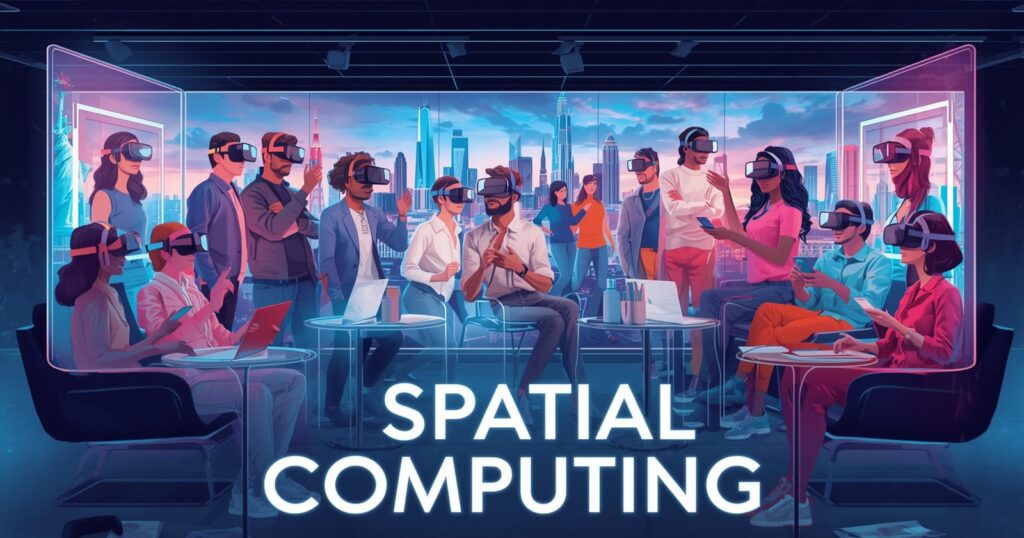
This emerging revolution is transforming virtual interactions into immersive, life-like experiences. Instead of a static Zoom window or a basic digital workspace, employees can now walk into a virtual office, sit at a virtual desk, brainstorm on a shared 3D whiteboard, or attend simulated training in a fully interactive environment.
This is no longer science fiction. Spatial computing is reshaping the future of work USA, virtual office technology changing how enterprises think about productivity, creativity, and workplace culture.
What Exactly Is Spatial Computing?
Spatial computing blends the digital and physical world by enabling devices to understand and interact with 3D space just like humans do. It uses:
- Augmented Reality (AR)
- Virtual Reality (VR)
- Mixed Reality (MR)
- AI-powered sensors
- Environment mapping
Think of it as the next phase of computing—where computers don’t just respond to clicks or taps; they respond to your environment, gestures, and physical movement.
In simple terms: Spatial computing makes the digital world feel real.

Why Is Spatial Computing Trending in the USA Right Now?
Several forces in the American tech ecosystem are accelerating spatial computing adoption:
1. Remote Work Is the New Normal
Companies from Silicon Valley to New York still operate hybrid or remote teams. Spatial computing offers a more engaging, collaborative alternative to traditional video calls.
2. Big Tech Investment
Apple Vision Pro, Meta Quest 3, Microsoft HoloLens, and startups like Varjo have pushed immersive tech into mainstream American businesses.
3. Rising Demand for Better Collaboration Tools
Enterprises want tools that strengthen team culture—even when employees are thousands of miles apart.
4. Training & Simulation Needs
From manufacturing to medical to aerospace, spatial computing ensures hands-on training without physical risk or cost.
5. The Push for Innovation
The USA remains the global hub for future-of-work technologies. Spatial computing aligns with America’s innovation-focused mindset.
The Virtual Office: No Longer Just a Concept
A “virtual office” used to mean logging in from home. Today, it means something far more immersive:
⭐ A 3D workspace you can walk around in, interact with, and collaborate inside—just like a physical office.
Here’s what today’s spatial computing–powered offices can deliver:
✔ Real-time collaboration in a shared virtual environment
Teams can:
- Walk into meeting rooms
- Draw on virtual boards
- View 3D prototypes
- Present ideas using holographic visuals
✔ Natural interaction
With hand tracking, eye tracking, and gesture controls, team members interact like they’re physically present.
✔ Presence and body language
Unlike flat video calls, spatial environments allow full-body avatars and subtle expressions, making communication more natural.
✔ Reduced cost for physical office spaces
Startups and SMEs in the U.S. are increasingly opting for virtual headquarters instead of commercial leases.
✔ Enhanced employee engagement
Virtual offices bring back the “human connection” missing in remote setups.
America is now witnessing a shift toward digital-first workplaces that feel completely real.
Industries in the USA Already Using Spatial Computing for Work
1. Tech & Software Development
Teams build digital twins, visualize code flows, and review UI/UX in 3D environments.
2. Healthcare
Doctors train in simulated operating rooms, practice complex surgeries, and conduct patient education using AR.
3. Real Estate
Virtual property walkthroughs, architectural design reviews, and 3D construction simulations are becoming standard.
4. Retail & E-Commerce
Virtual storefronts let customers explore products as if they’re inside a physical store.
5. Education & Corporate Training
From K–12 virtual classrooms to Fortune 500 onboarding programs, spatial learning is booming across the USA.
The Role of Apple Vision Pro and Meta Quest in the USA’s Virtual Work Revolution
The release of Apple Vision Pro was a major moment for spatial computing in America. Its advanced sensors, hand-tracking system, and immersive displays make it ideal for professional collaboration.
Similarly, Meta Quest 3 brought affordable mixed reality to everyday businesses, helping small companies adopt immersive work environments without large budgets.
These devices are redefining how Americans work:
- Virtual workspaces that feel like real offices
- Split-screen multitasking in 3D
- High-fidelity video pass-through for hybrid reality
- Hands-free or gesture-based collaboration
The result?
A more natural, intuitive, and human workspace experience.
How U.S. Companies Are Benefitting from “Real” Virtual Offices
1. Reduced Operational Costs
No rent. No utilities. No furniture.
A completely virtual HQ can save startups thousands every month. apple vision pro spatial computing
2. Improved Recruitment
Companies hire top American talent from any state—no relocation needed.
3. Better Collaboration Than Traditional Remote Work
Spatial offices recreate the energy and presence of a physical workspace.
4. Faster Prototyping & Innovation
Engineers and designers can manipulate 3D models in real time.
5. Sustainable & Eco-friendly
Virtual offices cut carbon emissions tied to long commutes and office infrastructure.
Will Spatial Computing Replace Physical Offices in the USA?
Not entirely—but it will become a primary workspace option for:
- Remote-first companies
- Tech startups
- Creative agencies
- Training-driven industries
- Global teams managing cross-country workers
Most experts predict that hybrid spatial computing offices will dominate U.S. work culture by 2030.

Challenges the USA Must Overcome
Even with rapid momentum, spatial computing faces hurdles:
- High headset costs (though decreasing)
- Limited battery life
- Some users experience motion discomfort
- Need for faster connectivity (5G/6G)
- Data privacy in virtual environments
But as American tech companies continue investing, meta quest 3 remote work these issues will gradually fade.
Future Outlook: America’s Next Leap in Work Culture
The rise of spatial computing marks a historic shift. Over the next few years, expect to see:
- Fully immersive corporate campuses
- AI-driven virtual assistants inside virtual offices
- Holographic meetings replacing Zoom
- Employees switching between real and virtual desks seamlessly
- High-resolution 3D avatars powered by generative AI
The USA’s workplace of the future will be fluid, immersive, and borderless.
Conclusion: The Virtual Office Is Becoming America’s New Reality
Spatial computing is not just enhancing remote work—it’s redefining it. As U.S. companies continue adopting this transformative technology, virtual offices will feel increasingly real, interactive, and productive.
Whether you’re a tech founder, remote worker, or business leader, the shift is already here:
The future of work in the USA is spatial, immersive, and incredibly real.
Read more tech breakthroughs at USAtrends.tech