Why Agentic AI & Micro-LLMs Matter Even for Your Phone
AI is moving faster than ever — but something big is changing beneath the surface. We’ve moved beyond the phase of chatbots that simply “reply.”…

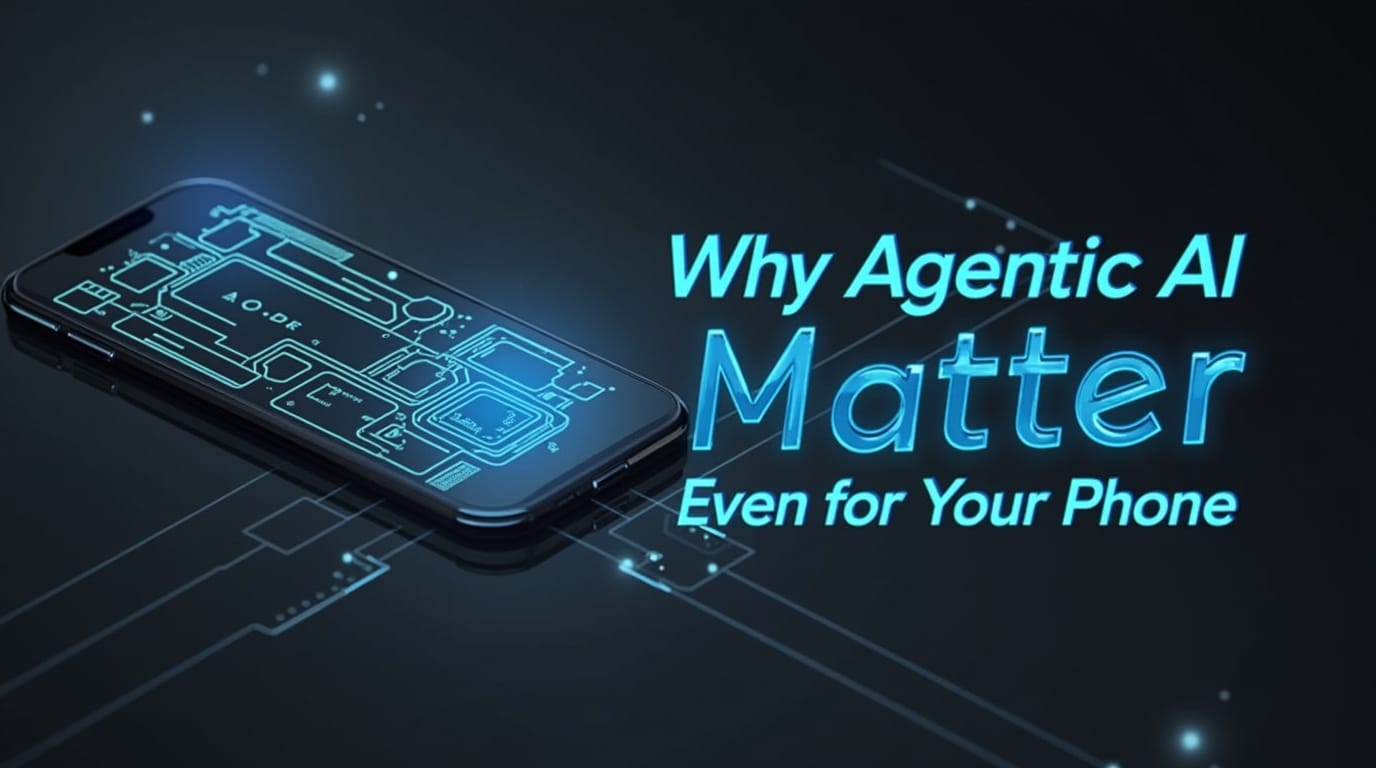
AI is moving faster than ever — but something big is changing beneath the surface. We’ve moved beyond the phase of chatbots that simply “reply.” Welcome to the age of Agentic AI — artificial intelligence that acts, decides, and learns on its own.
And right alongside it, another silent revolution is happening: Micro-LLMs — smaller, smarter AI models that can run directly on your phone, laptop, or smartwatch. Together, these two technologies are shaping the next era of digital intelligence — one that’s more personal, more private, and shockingly fast.
So let’s break it down — what makes Agentic AI and Micro-LLMs such game changers, and why they’re about to transform the smartphone in your pocket.
What Exactly Is Agentic AI?
Agentic AI is what happens when AI stops being just a “text generator” and becomes an autonomous problem solver.
Think of ChatGPT or Google Gemini — they answer your questions. But what if your AI assistant could:
- Plan your day automatically
- Book your meetings
- Write, schedule, and even send your emails
- Generate and edit your video clips for TikTok
- Or manage your online business without you touching the keyboard
That’s Agentic AI — an AI that acts like an agent, not just a chatbot. It doesn’t just reply — it executes.
The Core Idea Behind Agentic AI
An agentic system is designed to understand goals, make decisions, and take actions without needing constant human input.
It’s like giving your AI a mission and letting it figure out the best way to accomplish it.
Instead of asking “What’s the best time to post on Instagram?” — you’ll tell it, “Grow my Instagram followers,” and it’ll strategize, schedule, and post automatically.
Micro-LLMs: The Unsung Heroes of On-Device AI
Now, while Agentic AI gets the spotlight, Micro-LLMs (Micro Large Language Models) are the real engines driving the revolution — especially in smartphones.
For years, AI models like GPT-4 and Gemini Ultra have relied on massive cloud servers. Every time you ask a question, your request goes up to the cloud, gets processed, and comes back with an answer. That’s powerful, but also slow, expensive, and privacy-limited.
Enter Micro-LLMs — smaller, efficient models that can live inside your device.
These models are trained to perform similar tasks but use far less energy and memory. So instead of sending your data to the cloud, your phone can now:
- Translate conversations in real-time
- Summarize your emails offline
- Generate captions, summaries, and to-do lists on the spot
- Offer AI-driven camera optimization — all without a server connection
Why 2025 Is the Year of Agentic + Micro AI
2025 is the year this duo goes mainstream.
Apple, Google, and Samsung are all building AI-native smartphones that run on-device AI agents. Google’s Pixel 9 Pro already uses an internal “Micro Gemini” for quick summarization and offline tasks. Apple is rumored to launch Apple Intelligence, a suite of on-device AI tools designed to run privately on iPhones.
This marks a major shift from “cloud AI” to personal AI.
What That Means for You
Your phone will soon stop being a passive tool and start becoming a personal agent.
It won’t just answer — it’ll do things for you.
Imagine this:
You’re getting ready for work. Your phone automatically checks traffic, reschedules your first meeting because it detects a delay, adjusts your thermostat remotely, and recommends a podcast based on your mood and schedule.
That’s not just smart — that’s agentic.
How Agentic AI Actually Works
To make sense of how this is happening, think of Agentic AI as a 3-layered brain:
- Cognitive Layer (LLM Core): This is where understanding happens — your AI processes context and text.
- Memory Layer: The AI remembers your preferences, tasks, and habits over time.
- Action Layer: It executes — sending emails, controlling apps, or making purchases.
These layers are what allow Agentic AI to behave like an assistant that knows you — not just your prompts.
So, while traditional AI might answer,
“The best Italian restaurant nearby is Olive & Fig.”
Agentic AI might instead say,
“I’ve booked you a table for two at Olive & Fig at 7 PM — and I’ll remind you an hour before.”
How Micro-LLMs Power This Revolution
Micro-LLMs make this possible without needing the internet.
Because they’re optimized for edge computing, they can run efficiently on processors like Apple’s Neural Engine, Qualcomm’s Snapdragon X Elite, and Google’s Tensor G4.
These chips handle billions of operations locally — allowing AI models to work privately, securely, and instantly.
That’s how your future smartphone could:
- Transcribe conversations in real-time
- Edit photos automatically based on style
- Detect health patterns from wearable data
- Offer context-aware suggestions while offline
All powered by Micro-LLMs, not massive cloud servers.
The Privacy Revolution
One of the biggest wins with Micro-LLMs is privacy.
In the old AI model, every query you typed — whether personal or professional — was sent to the cloud for processing. That meant servers somewhere in the world had your data.
With Micro-LLMs, your data never leaves your phone.
AI processes everything locally, ensuring total privacy and regulatory compliance, especially in the U.S. where privacy laws are tightening.
This also means no lag, no subscription fees, and no fear of data leaks.
Your phone will soon be as private as your thoughts — but as smart as a supercomputer.
Real-World Examples of Agentic AI + Micro-LLMs in Action
Here are some practical examples of where we’re already seeing this shift:
- Google Pixel Series: Summarizes call hold times, filters spam, and summarizes voice messages using on-device AI.
- Samsung Galaxy AI: Uses a Micro-LLM for live call translation and chat assist — all processed offline.
- Apple’s Siri (2025 Update): Soon to evolve into a full Agentic AI, capable of scheduling, emailing, and automating multi-app tasks without internet access.
- Wearables: Smartwatches that detect stress, suggest workouts, or predict health anomalies using onboard AI models.
Why It Matters for Your Phone
Let’s get specific — how does this actually improve your everyday phone experience?
1. Faster Response Times
No internet? No problem.
Micro-LLMs process everything on your device, making your AI assistant 10x faster than cloud-based ones.
2. Personalized Experience
Agentic AI learns your habits — your routines, preferences, and goals — and tailors suggestions without you asking.
3. Greater Privacy
Your chats, voice recordings, and documents stay offline. That means no data scraping or server tracking.
4. Better Battery Efficiency
Micro-LLMs are optimized for low-power consumption — giving you intelligent features without draining your battery.
5. Seamless Multitasking
Your AI can now run multiple tasks simultaneously — draft an email, summarize a PDF, and schedule meetings — while you scroll Instagram.
Agentic AI in Your Everyday Life (2025 Edition)
Here’s how Agentic AI could soon transform daily routines:
- Morning: It analyzes your sleep and health data, plans your breakfast, and suggests the optimal workout.
- Work: It organizes your calendar, summarizes Slack messages, and drafts responses based on tone and urgency.
- Afternoon: It manages your reminders, creates summaries of calls, and adjusts notifications depending on focus time.
- Evening: It curates entertainment options based on your mood and even sets “focus-free” time to reduce screen fatigue.
Your phone becomes more than a device — it becomes a thinking partner.
The Industry Impact: A New AI Ecosystem
The rise of Agentic AI and Micro-LLMs is also reshaping the tech industry itself.
Chipmakers like Qualcomm and Apple are designing processors optimized for AI inference. Software companies like Anthropic, OpenAI, and Mistral are developing smaller, efficient models for edge deployment.
Even app developers are creating “AI-native” applications designed to work offline with on-device intelligence.
This means the next wave of startups won’t just build apps — they’ll build AI agents that run apps for you.
Challenges Ahead
Of course, the road isn’t smooth.
Developers still face challenges like:
- Limited memory space on mobile devices
- Hardware optimization for real-time AI tasks
- Balancing accuracy with model size
- Ensuring ethical, predictable behavior in autonomous AI
But innovation in chip design and quantization techniques (like QLoRA and 4-bit models) are rapidly addressing these issues.
The Future: AI That Thinks, Acts, and Learns — On Your Phone
In the next two years, we’ll likely see the rise of multi-agent ecosystems — AI systems that collaborate.
Imagine one AI agent that manages your communication, another that handles finances, and another that curates entertainment — all working together, securely, on your device.
That’s where Agentic AI and Micro-LLMs are headed: toward personalized digital ecosystems that function like digital versions of you.
By 2026, the smartphone could be more than just a screen — it’ll be your co-pilot for life.
Final Thoughts
Agentic AI and Micro-LLMs represent a turning point in technology. They make AI personal, private, and actionable.
Your phone isn’t just a communication device anymore — it’s evolving into a personal intelligence system capable of understanding context, executing complex tasks, and protecting your data.
The next big leap in AI won’t happen in the cloud — it’ll happen right in your pocket.
So the next time your phone auto-summarizes your day, suggests a better schedule, or edits your photos before you even ask…
remember, you’re not just using AI.
You’re working alongside it.
If you’re interested and curious about more AI, read more on USAtrends.tech.