Apple HomePod Mini Review 2025 Smartest Speaker That’s Changing American Homes
In today’s world, smart homes are no longer a futuristic dream — they’re becoming an everyday reality across the United States. From voice-controlled thermostats to…

In today’s world, smart homes are no longer a futuristic dream — they’re becoming an everyday reality across the United States. From voice-controlled thermostats to AI-powered security systems, everything around us is getting connected. Yet among all these innovations, one tiny device has managed to make a big impact: the Apple HomePod mini.
Launched as Apple’s compact smart speaker, the HomePod mini has now become a central piece in the modern American household. It’s stylish, powerful, and deeply integrated with Apple’s ecosystem — making it an irresistible option for iPhone and iPad users who want seamless control over their digital lives.
But what really makes this gadget stand out? Is it just another speaker, or does it genuinely redefine how we interact with our homes in 2025? Let’s dive deep into what the HomePod mini brings to the table and why it’s currently one of the most talked-about smart speakers in the U.S.
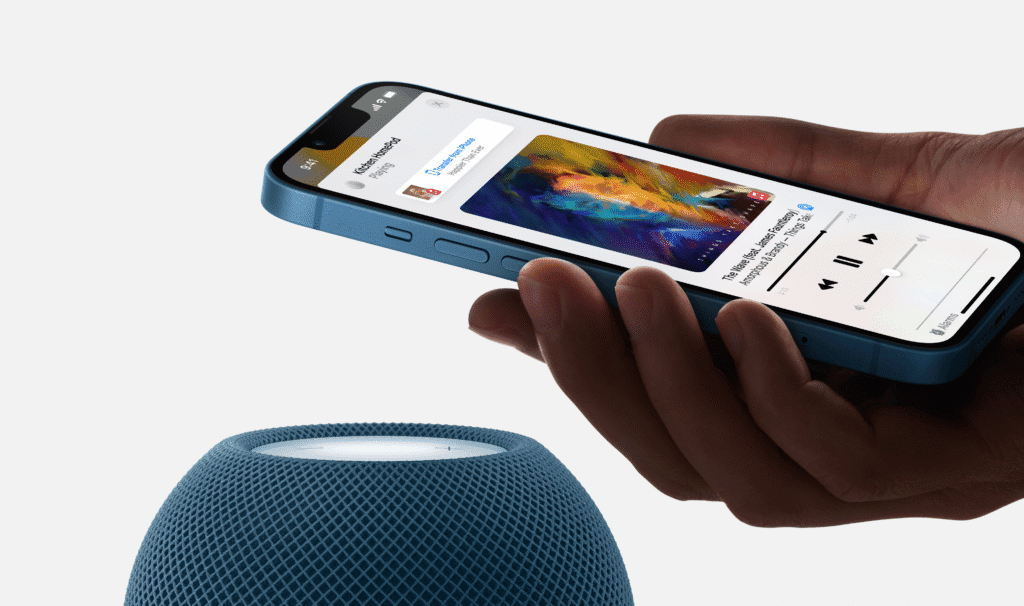
Compact Size, Big Sound: Apple’s Design Philosophy at Its Best
Apple’s design legacy is built on minimalism — clean lines, intuitive usability, and hardware that feels like art. The HomePod mini is the perfect continuation of that philosophy.
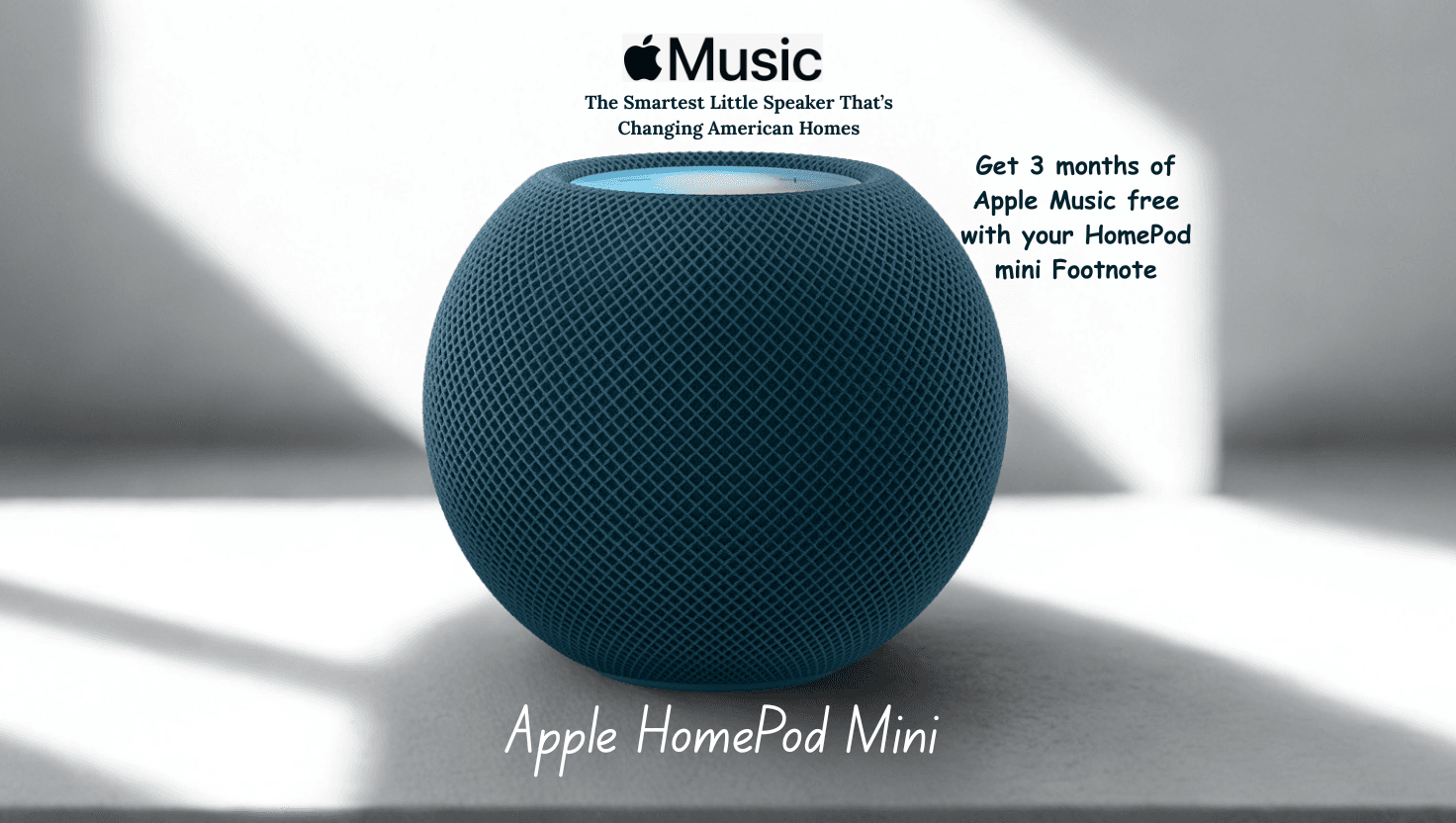
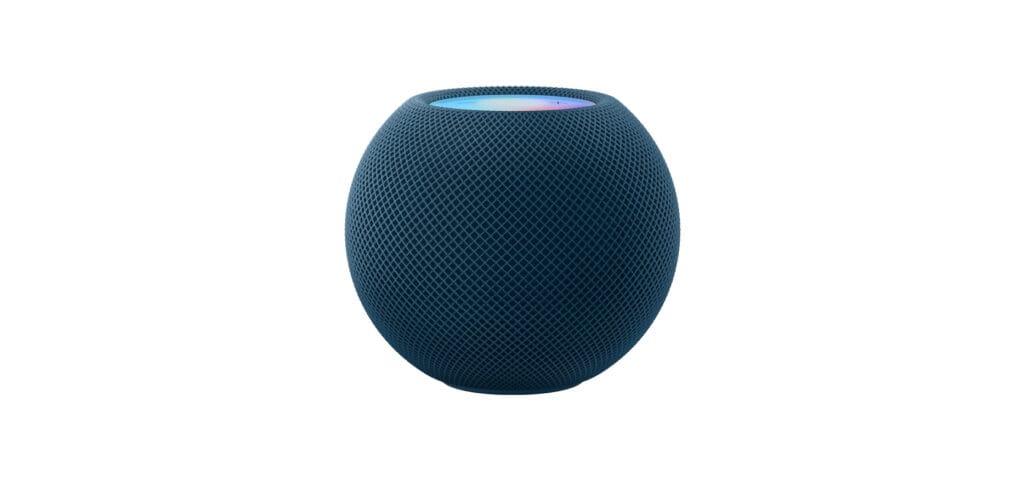
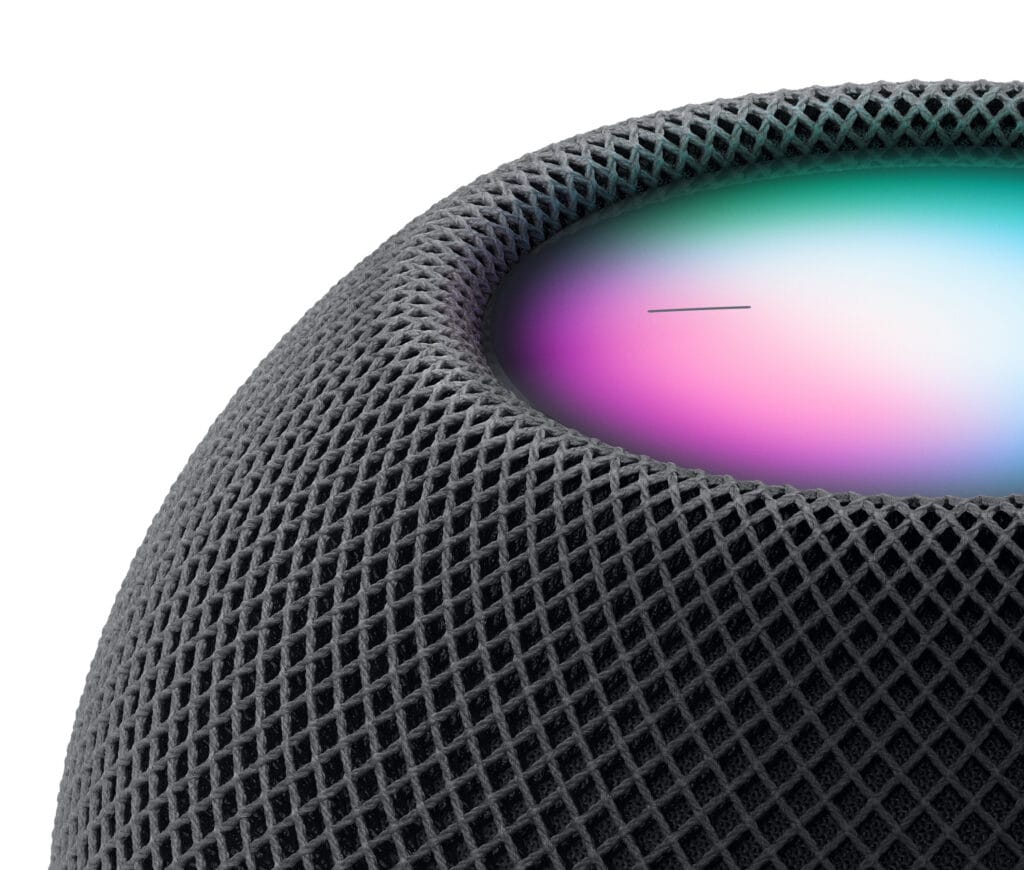
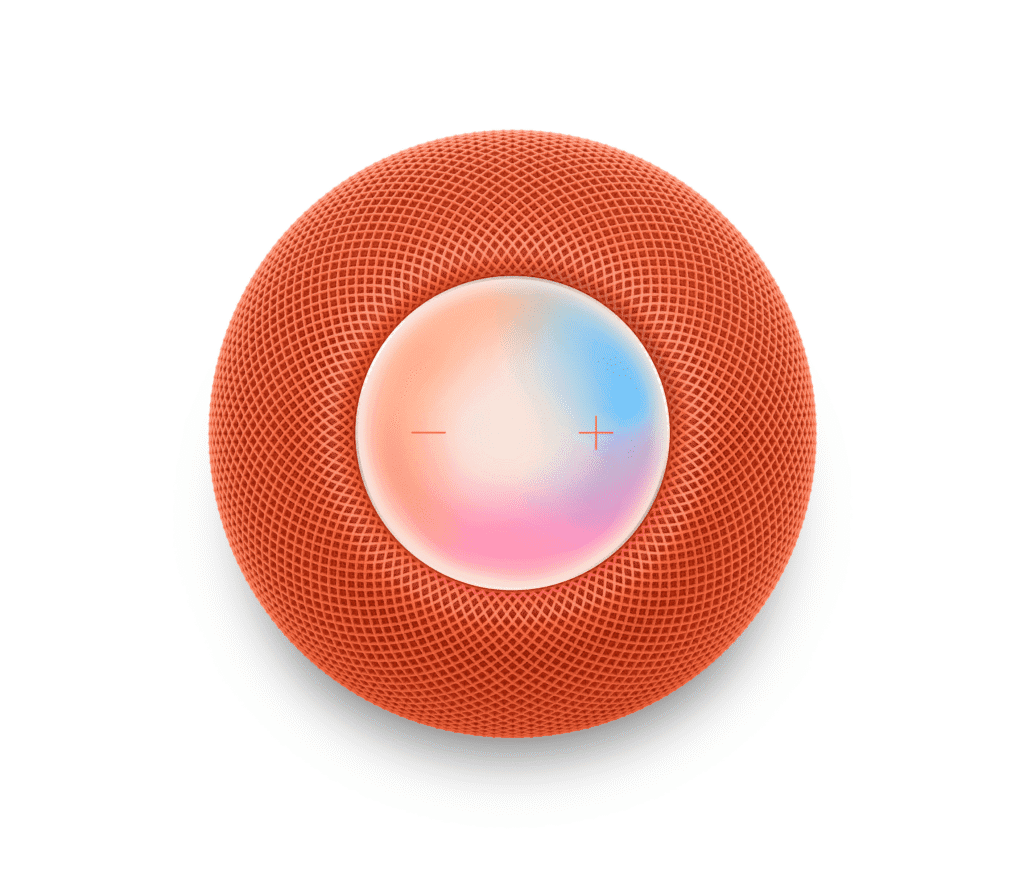
At just 3.3 inches tall, this small sphere fits anywhere: on a bedside table, kitchen counter, bookshelf, or office desk. Wrapped in a soft, acoustically transparent mesh fabric, it looks elegant in any setting. The top is touch-sensitive, lighting up with colorful wave animations whenever Siri responds.
Despite its small footprint, the HomePod mini produces surprisingly full 360° audio. Thanks to Apple’s computational audio technology and S5 chip, it dynamically adjusts sound in real time to ensure clarity and balance — whether you’re playing jazz, podcasts, or a cinematic playlist on Apple Music.
If you’ve used portable speakers before, you’ll instantly notice the difference. Apple has engineered the HomePod mini to project audio evenly in all directions, creating a consistent sound field that fills a room without distortion.
This tiny speaker’s mantra? “Small size, massive presence.”
Seamless Integration With the Apple Ecosystem
What truly elevates the HomePod mini above its competitors is how deeply it integrates with other Apple products.
If you’re an iPhone, iPad, or Mac user, this device feels like an extension of your existing setup. Once connected to your Apple ID, it automatically syncs with your devices. You can:
- Ask Siri to send messages or read texts.
- Handoff music from your iPhone just by bringing it near the HomePod mini (thanks to Ultra Wideband technology).
- Use Intercom to send voice notes to other HomePods or Apple devices in your home.
- Control your smart lights, thermostats, and door locks through Apple HomeKit.
For U.S. households that are already part of the Apple ecosystem, this integration is gold. It’s simple, fast, and private — without the friction that comes with third-party apps or cross-brand connectivity.
And for 2025, Apple has been rolling out Matter and Thread compatibility, allowing HomePod mini to work as a smart-home hub that connects devices from multiple brands — not just Apple’s. This move has made it one of the most versatile home assistants on the market.
Designed for Everyday Living
In a typical American home, convenience and design go hand-in-hand. Apple clearly understood this when designing the HomePod mini.
The speaker is energy efficient, environmentally conscious, and crafted from 100% recycled mesh fabric. It comes in five color options — white, space gray, orange, yellow, and blue — plus a “Midnight” edition that launched recently. Each variant adds a touch of personalization that feels both modern and warm.
Its built-in temperature and humidity sensors are surprisingly useful. You can ask Siri things like, “Hey Siri, what’s the temperature in the living room?” and get an instant response without checking your phone. For homeowners with connected thermostats or smart blinds, these sensors also help automate comfort settings.
Another thoughtful feature is its multi-room capability. You can pair multiple HomePod minis around your home and create a connected audio network. Whether you’re hosting a house party, cooking dinner, or just relaxing, you can control what plays in each room — or have synchronized music throughout your entire house.
The Sound Experience: Apple’s Audio Brilliance
When it comes to sound, Apple rarely compromises. The HomePod mini is a technical marvel for its size.
It uses a full-range driver paired with dual passive radiators to enhance bass and clarity. The acoustic waveguide at the base helps distribute audio evenly across the room, delivering a 360° listening experience that feels balanced no matter where you stand.
But what makes the difference is Apple’s computational audio — software that continuously analyzes what you’re hearing and optimizes the sound in real time.
This means:
- Vocals sound crisp and clear, even at lower volumes.
- Bass feels deep but not overpowering.
- Instruments maintain separation and texture, avoiding the “muddy” sound common in smaller speakers.
If you want a more cinematic experience, you can pair two HomePod minis together for stereo sound, or connect them with an Apple TV for a mini home-theater setup.
For a $99 device, the sound quality is genuinely impressive. It’s not meant to replace a high-end Sonos or Bose system, but it easily outperforms most speakers in its price range — including Amazon’s Echo Dot and Google’s Nest Mini.
Siri: Smarter, Faster, and More Natural in 2025
Siri has come a long way since its early days, and the HomePod mini showcases just how far Apple’s AI assistant has evolved.
In 2025, Siri feels more conversational and context-aware. It can now distinguish between multiple voices in your household, giving personalized responses. For instance, when you say, “Hey Siri, what’s on my calendar?”, it will know which family member is speaking and fetch that person’s schedule.
Siri can also handle follow-up commands naturally, without needing to repeat “Hey Siri” every time. The voice sounds smoother and more human-like, especially in the latest software updates.
And unlike many competitors, Apple continues to emphasize privacy. Your voice requests are not permanently stored or sold to advertisers. Processing happens on-device whenever possible — a major selling point for privacy-conscious Americans.
Smart-Home Powerhouse: Hub of the Connected Home
The HomePod mini isn’t just a speaker — it’s the brain of your smart home.
As a HomeKit and Matter hub, it can manage all your smart devices — from lights and thermostats to cameras and doorbells. Using Thread networking, it ensures stable, low-latency communication between devices, even if your Wi-Fi drops momentarily.
Imagine this: you walk into your house after a long day, and your HomePod mini automatically turns on the lights, adjusts the temperature, and plays your favorite playlist. That’s the kind of automation it enables.
In 2025, U.S. consumers are rapidly adopting Matter-compatible devices, which means the HomePod mini’s importance as a home hub is only growing. It bridges Apple’s ecosystem with third-party brands like Nanoleaf, Eve, and Philips Hue — finally making the “smart home” dream more universal.
Privacy and Security: Apple’s Most Underrated Strength
In an era where privacy breaches are increasingly common, Apple continues to differentiate itself through a strong commitment to user security.
All communications between your HomePod mini and Apple’s servers are end-to-end encrypted. Your personal requests — messages, reminders, and notes — are processed using on-device intelligence whenever possible.
Apple doesn’t build profiles of your activity or sell voice data to advertisers. This is a key differentiator compared to Amazon Alexa and Google Assistant. For U.S. consumers concerned about digital privacy, this peace of mind is worth the investment.
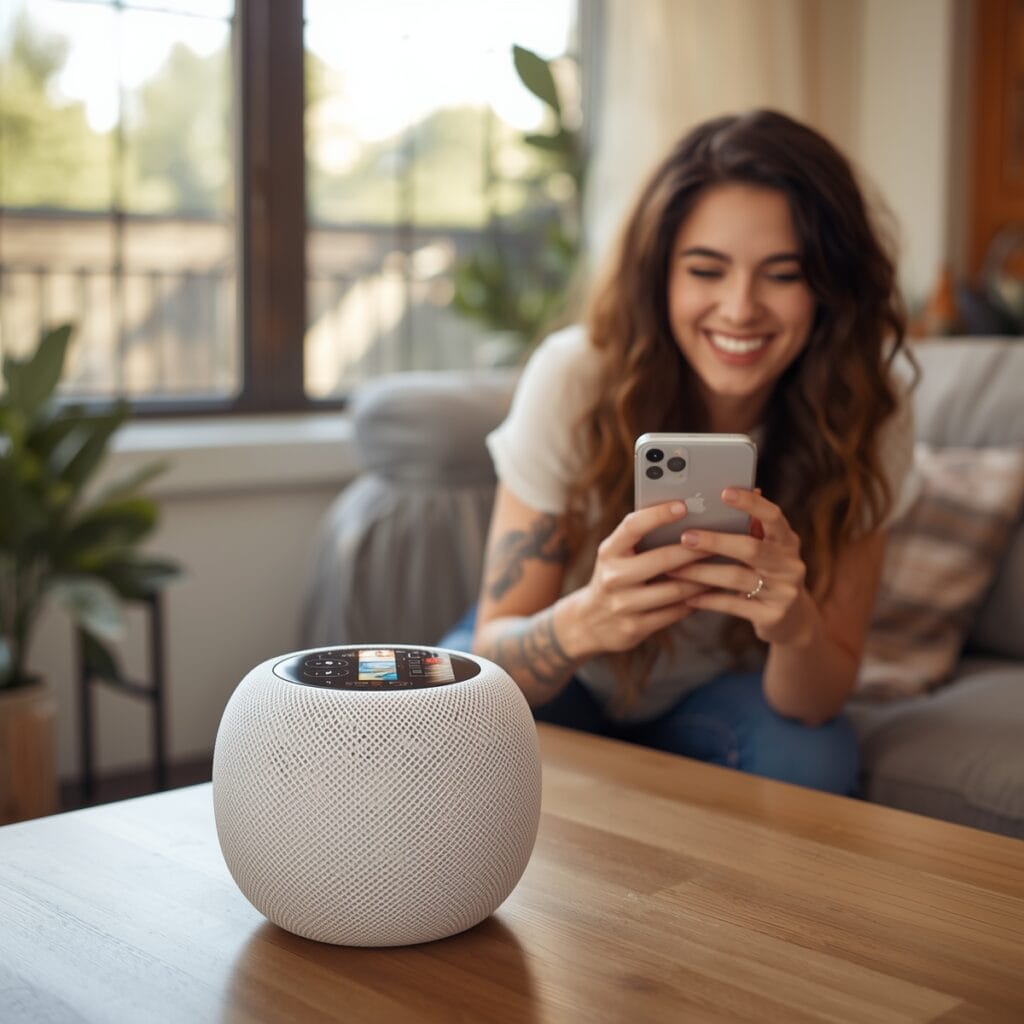
The Competition: HomePod Mini vs. Amazon Echo vs. Google Nest
No review is complete without a fair comparison. The U.S. smart-speaker market is dominated by three players: Apple, Amazon, and Google.
| Feature | Apple HomePod mini | Amazon Echo (5th Gen) | Google Nest Audio |
|---|---|---|---|
| Price | $99 | $99 | $99 |
| Voice Assistant | Siri | Alexa | Google Assistant |
| Audio Quality | Excellent clarity, balanced bass | Louder bass, less detail | Clear mids, good treble |
| Smart-Home Platform | HomeKit + Matter + Thread | Alexa + Zigbee | Google Home + Matter |
| Privacy | Strongest (on-device processing) | Moderate | Moderate |
| Design | Minimal, stylish | Industrial | Soft fabric, minimalist |
Each has its strengths, but for Apple users, the HomePod mini is the most natural fit. It’s also the best-looking device among the three — a point that matters in style-driven American homes.
If you’re deeply into Amazon services or Google’s ecosystem, their smart speakers might make more sense. But for those already using iPhones, iPads, or Macs, the HomePod mini offers the smoothest, most secure experience.
Price and Availability in the USA
The HomePod mini retails for $99 in the U.S. and is available directly through Apple’s website, Apple Stores, and major retailers like Best Buy and Target.
Occasionally, you can find discounts bringing it down to around $79 during sales events like Black Friday or Prime Day.
It’s worth noting that Apple continues to update the software regularly — adding features like temperature/humidity tracking, new Siri voices, and improved multi-user recognition. This long-term support ensures your investment stays relevant for years.
What’s Coming Next: HomePod Mini 2 Rumors
Tech insiders have hinted that Apple is developing a second-generation HomePod mini, possibly launching in late 2025.
Expected updates include:
- A more powerful chip for faster Siri responses.
- Improved sound tuning with deeper bass.
- Enhanced UWB (Ultra Wideband) features for more precise handoff.
- Additional color options and maybe even a built-in display on top.
While these rumors are exciting, the current HomePod mini still remains one of the best-value Apple products on the market — a rare mix of affordability, design, and performance.
Why It’s Trending in the United States
So why is the HomePod mini suddenly everywhere?
A few reasons:
- Affordable entry into Apple’s ecosystem – Unlike the $299 full-size HomePod, the mini’s $99 price point makes it accessible.
- Smart-home boom – As more Americans adopt smart lights, locks, and thermostats, the demand for reliable hubs is skyrocketing.
- Privacy awareness – Consumers are increasingly cautious about who they trust with their data. Apple’s privacy stance resonates strongly.
- Lifestyle appeal – The HomePod mini doubles as décor. Its design blends seamlessly with modern interiors, making it both functional and fashionable.
This perfect blend of performance, design, and trust has made it a top-trending gadget in the U.S. for 2025.
Verdict: Should You Buy the Apple HomePod Mini in 2025?
If you’re already part of the Apple ecosystem, the answer is a resounding yes.
The HomePod mini is not just a speaker — it’s a lifestyle device. It makes your home smarter, your routines simpler, and your music better.
Pros:
- Compact and beautifully designed
- Surprisingly rich audio for its size
- Deep Apple ecosystem integration
- Excellent privacy and security
- Affordable and energy-efficient
Cons:
- Limited for Android users
- Bass not as strong as larger speakers
- Some smart-home features are Apple-exclusive
But overall, the HomePod mini punches far above its weight. It’s a device that transforms how you interact with your home, delivering Apple’s signature blend of elegance and intelligence — in the palm of your hand.
Final Thoughts
In 2025, the smart-speaker market in the U.S. is more competitive than ever. Yet the Apple HomePod mini stands out as the perfect balance of technology, design, and privacy.
It represents Apple’s vision of a connected world — one that’s not just smart, but thoughtful. From effortless device integration to privacy-first intelligence, it embodies the kind of innovation that keeps Apple ahead of the curve.
So, if you’re looking to make your home smarter this year, don’t overlook the smallest speaker in Apple’s lineup. Because sometimes, the tiniest gadgets create the biggest change.
Ready to explore more cutting-edge technology trends?
Visit USAtrends.tech for the latest in gadget reviews, AI innovations, and digital lifestyle stories shaping America’s tech future.